








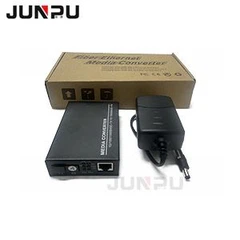



Fiber Optical Splitter
What Is Fiber Optical Splitter
A fiber optic splitter is a passive device used to split an incoming fiber optic signal into multiple separate signals. The splitter has one input and multiple outputs, allowing a single fiber optic cable to be distributed to multiple locations or devices. The splitter works by using a variety of techniques, including fused biconical tapering, planar lightwave circuits, and micro-electromechanical systems. Splitting ratios can vary from 1:2 to 1:64, and splitters can be used for both single-mode and multimode fibers.
Advantages Of Fiber Optical Splitter
Distributed Network: Fiber optic splitters enable the creation of distributed networks, which can be used to connect multiple devices and locations over long distances.
Low Signal Loss: When the signal is split using a fiber optical splitter, there is very little signal loss, compared to electrical splitters. This results in a more efficient and reliable network.
Efficient Bandwidth Utilization: Fiber optical splitters allow for efficient bandwidth utilization by distributing traffic to multiple fibers. This helps to reduce congestion on the network and improve overall performance.
Flexibility: Fiber optical splitters are highly flexible, allowing for easy expansion and upgrades. Additional splitters can be added to the network when required, without disrupting the existing infrastructure.
High Reliability: Optical fiber is highly reliable and rarely breaks or requires maintenance. This makes fiber optical splitters a good investment for long-term use.
Better Security: Fiber optic splitters provide a more secure network connection compared to traditional copper wires since they are less susceptible to hacking and eavesdropping.


Why Choose Us
Professional team
Professional sales team and engineer team provide professional technical Support,Test video and Sample support
Advanced Equipment
Equipment based on the latest technological developments has higher efficiency, better performance and stronger reliability.
One-stop Solution
With rich experience and one-to-one service,we can help you choose products and answer technical questions.
Innovation
We are dedicated to improving our systems continually, ensuring that the technology we offer is always cutting edge.
High Quality
Our products are manufactured or executed to very high standards, using the finest materials and manufacturing processes.
Competitive Price
We have professional sourcing team and cost accounting team, stive to reduce cost and profit and provide you a good price.
Types of Fiber Optical Splitter
There are several types of fiber optic splitters, including:
Fused Biconic Taper (FBT) Splitter
FBT splitters are made by fusing and tapering two or more fibers together. They are typically used in low-cost applications and are available in a variety of configurations, such as 1×2, 1×4, 1×8, and 1×16.
Planar Lightwave Circuit (PLC) Splitter
PLC splitters are made using a silica-based waveguide chip. This allows for a more precise split of the optical signal. They are more expensive than FBT splitters but offer better performance and are available in higher configurations, such as 1×32 and 1×64.
Fused Singlemode Fiber (FSMF) Splitters
FSMF splitters are similar to FBT splitters but are made using single-mode fiber, which allows for a higher split ratio and better performance.
Polarization-Maintaining (PM) Splitters
PM splitters are used in applications where the polarization of the optical signal needs to be maintained. They are typically used in fiber optic sensors and other high-precision applications.
Applications of Fiber Optic Splitter
PLC splitter are frequently used in optical access networks to provide high-speed internet connectivity to several clients. They provide end users with high-speed and dependable connectivity and are perfect for FTTH (Fiber to the Home) and FTTB (Fiber to the Building) applications. FTTH mainly uses PON network technology, which requires many low-cost optical splitters.
PLC splitter have two different distribution modes in the FTTH network: centralized distribution and cascaded distribution. In PON networks, PLC splitters are usually installed between an Optical Line Terminal (OLT) and an Optical Network Unit (ONU) or Optical Network Terminal (ONT) near the end user. The input end of the PLC splitter is connected to the optical fiber link of the OLT in the central office (CO), and multiple optical signals are split and transmitted to the end users of the optical network.
PLC fiber splitters are frequently used in data center networks to distribute fast data to numerous servers and storage devices. This makes it possible for data centers to efficiently handle high volumes of data traffic, resulting in quick and seamless data transfer.
Components of Fiber Optic Splitters
Fiber optic splitters consist of several key components that work together to split and distribute optical signals. Understanding these components is essential for comprehending the inner workings of fiber optic splitters. Let’s take a closer look at each of these components:
1. Input And Output Ports: Input ports are where the incoming optical signal enters the splitter, typically through a single fiber optic cable. The number of input ports depends on the type and configuration of the splitter. Output ports are where the split optical signals exit the splitter and are connected to the recipients or other network devices. The number of output ports can vary and determines the number of paths into which the signal is divided.
2. Couplers And Dividers: Couplers and dividers play a vital role in splitting the optical signal. They are designed to divide the incoming signal into multiple output paths. Couplers are responsible for distributing the signal evenly among the output ports, ensuring that each path receives a portion of the signal’s power. Dividers, on the other hand, separate the signal into distinct paths, allowing for simultaneous transmission to multiple recipients.
3. Fiber Array And Waveguides: Fiber arrays are arrays of individual fibers that are aligned and fused together to form the splitting region within the splitter. They provide the physical framework for splitting the optical signal. Waveguides, on the other hand, are structures that guide and direct the optical signal within the splitter. In the case of Planar Lightwave Circuit (PLC) splitters, waveguides are etched onto a silica or silicon substrate, allowing for precise control and distribution of the optical signal.
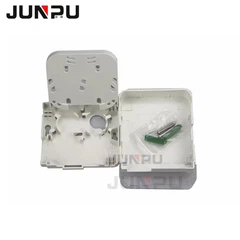
4. Protective Casings: Fiber optic splitters are housed in protective casings to shield the delicate components from external environmental factors. These casings are typically made of durable materials, such as metal or plastic, and provide mechanical protection, as well as maintain the alignment and stability of the internal components. The protective casings also assist in managing the fiber connections, ensuring reliable and secure operation.
A fiber optic splitter and a fiber optic connector are distinct components used in fiber optic networks, although they both serve to connect and direct light signals. Here are the key differences between the two:
Functionality:
Fiber Optic Splitter: A splitter is used to divide the light signal coming from a single fiber into multiple outputs. This is typically done in passive optical networks (PONs) where a service provider delivers a signal to several end users via a single fiber.
Fiber Optic Connector: A connector is used to join lengths of fiber together, allowing for the termination and interconnection of fiber cables. It provides a means to easily connect and disconnect fibers for maintenance or to extend the length of a fiber link.
Design:
Fiber Optic Splitter: Splitters are usually integrated into passive optical network (PON) systems. They are often pre-configured to split signals in specific ratios, such as 1:4, 1:8, 1:16, etc., where one input is divided evenly among four, eight, or more outputs, respectively.
Fiber Optic Connector: Connectors are hardware devices that physically connect fibers. They consist of a ferrule that holds the fiber in place and alignment mechanisms that ensure the fiber cores of mating connectors are properly aligned for light transmission.
Impact on Light Signal:
Fiber Optic Splitter: A splitter does not typically attenuate the light signal significantly, although there is some inherent loss due to splitting. The amount of loss varies depending on the split ratio.
Fiber Optic Connector: Connectors introduce a certain amount of insertion loss when fibers are joined. This loss is due to the gap between the ferrules and the imperfections in the mating surfaces, which can cause light to be lost. The amount of loss varies based on the type of connector and the quality of the mating.
Usage:
Fiber Optic Splitter: Splitters are typically installed in fixed locations within a PON architecture to distribute light signals to multiple subscribers.
Fiber Optic Connector: Connectors are widely used in both permanent installations, such as backbone networks, and temporary setups, like lab testing or field trials. They allow for flexibility in how fibers are connected and enable easy access to fibers for testing or troubleshooting.
Here are some ways in which an ODF can be integrated with other network equipment:
Direct Connection
The ODF can be directly connected to switches or routers via optical fiber cables. The fiber cables carry signals between the ODF and the network equipment, enabling data communication.
Network Interface Device
A network interface device (NID) can be used to connect the ODF to the network equipment. The NID translates optical signals from the ODF to electrical signals that can be understood by the network equipment.
Optical Add/Drop Multiplexers (OADM)
OADMs can be used to integrate the ODF with WDM (Wavelength Division Multiplexing) networks. OADMs allow specific wavelengths to be added or dropped from the optical signal as it passes through the ODF, allowing for efficient signal management within the network.
Network Management Systems
Integration with network management systems allows for centralized control and monitoring of the ODF along with other network equipment. This integration enables real-time status updates, fault detection, and performance monitoring of the entire network.
Physical Location and Layout
The physical location and layout of the ODF within the network facility are crucial for proper integration. The ODF should be located in close proximity to other network equipment to minimize cable lengths and potential network bottlenecks.
Redundancy Planning
Redundancy planning, such as having redundant fibers and connections, ensures that the network remains operational even if a component fails. This is achieved through proper design and integration of the ODF with other network elements.
The Importance of Fiber Optic Splitters
Fiber optic splitters have a host of applications in the telecommunication industry. They are critical to the functionality of networks like Fiber to the Home (FTTH), wherein a single optical fiber serves multiple homes or commercial buildings.
Efficient Signal Distribution
The ability to split light signals into multiple outputs enables efficient use of a single optical fiber for serving multiple destinations. This efficiency is pivotal in maintaining robust and high-speed communication networks.
Cost-Effectiveness
Fiber optic splitters help to reduce the overall cost of network infrastructure by minimizing the number of required optical fibers.
Scalability
With the use of fiber optic splitters, network expansion can be easily achieved without the need for additional fibers. This scalability is vital for the growth of telecommunication networks.
How Does a Fiberoptical Splitter Work
A FiberOptical Splitter is a device used in fiber optic communication systems to divide the optical signal into multiple separate channels. Here's how it works:

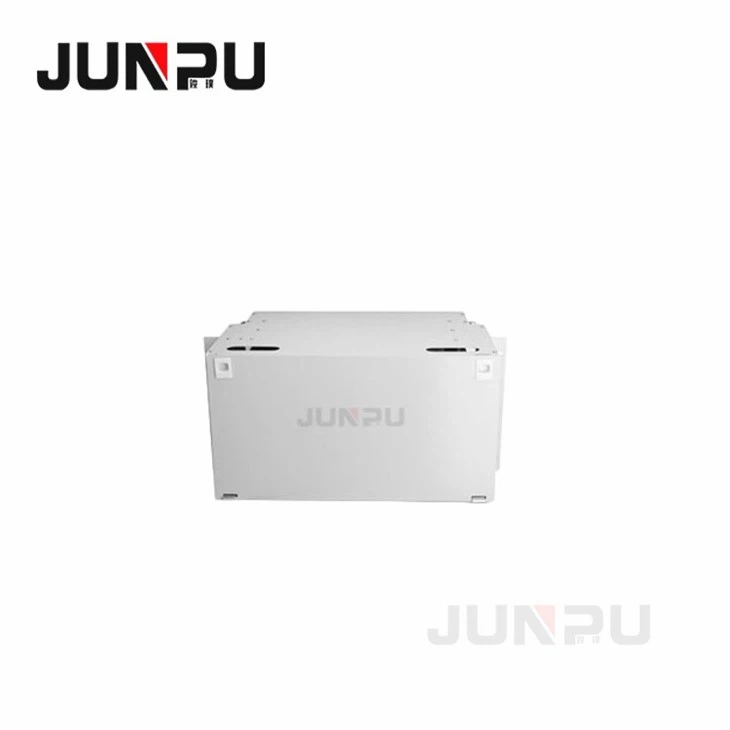


When an optical signal enters the FiberOptical Splitter, it passes through a beam splitter or waveguide structure. The beam splitter divides the incoming light into multiple beams, each directed to a different output port.
The beam splitter is typically made of a special optical material that refracts or reflects the light to different angles, directing it to the respective output ports. Each output port is connected to a separate optical fiber, which carries the divided optical signal to its destination.
The FiberOptical Splitter acts as a passive device, meaning it does not amplify or modify the optical signal in any way. It simply divides the signal into multiple parts, maintaining the integrity and characteristics of the original signal.
The of the FiberOptical Splitter depends on its design and can range from a simple 1-to-2 split (dividing the signal into two channels) to more complex ratios such as 1-to-4, 1-to-8, or even higher.
That FiberOptical Splitters do introduce some insertion loss, meaning there is a small decrease in the optical power of the signal as it passes through the splitter. The amount of insertion loss depends on the splitter's specifications and can vary between different models.
The quality of a fiber optic splitter is mainly determined by five specifications, namely optical bandpass, insertion loss, return loss, uniformity, and directivity. The following part outlines how to test each specification.
The optical bandpass can be tested by connecting the optical splitter to an optical spectrum analyzer with a high-powered light source having a central wavelength of the required bandpass. The attenuation across the required bandpass shall meet the splitter requirements.
The insertion loss is tested by using a light source and power meter. The reference power level is obtained and each output port of the optical splitter is measured.
The return loss is tested by using a return loss meter. The input port of the splitter is connected to the return loss meter and all the output ports are connected to a non-reflective index matching gel.
The uniformity of the optical splitter can be determined by referring to the results from the insertion loss test to ensure that the difference between the highest loss and the lowest loss is within the acceptable uniformity value.
Directivity can be measured in a manner similar to the insertion loss test. However, the light source and power meter are connected to each of the input ports and two output ports.
How To Manufacture a Fiber Optic Splitter
The manufacturing of fiber optic splitters involves a precise and delicate process. It starts with preparing the materials, such as the fiber optic cables and connectors. These materials need high quality to ensure optimal performance.
01
Next, align and fuse fibers together using specialized fusion splicing equipment. This fusion process forms the waveguides necessary for splitting the light signal. The fibers are then protected with a protective coating to enhance their durability.
02
After the fusion, the splitter is tested and inspected for quality assurance. Various tests, including insertion loss and return loss measurements, are conducted to ensure the splitter meets the required specifications.
03
A fiber optic splitter plays a crucial role in dividing optical signals for multiple connections in telecommunication networks. By understanding how it works and considering factors such as splitting ratio and wavelength compatibility, you can choose a high-quality splitter that meets your requirements.
04
The manufacturing process of a splitter involves precision and testing to ensure superior performance.The continued advancement of fiber optic technology relies on reliable and efficient fiber optic splitters.
05
How To Choose The Right Fiber Optic Splitter
The split ratio is the ratio of the output power to the input power. When choosing a splitter, you need to consider the number of outputs you require and the split ratio of each output. For example, a 1:4 splitter will split the input signal into four equal outputs, while a 1:8 splitter will split the input signal into eight equal outputs.
Insertion loss is the amount of signal loss that occurs when the signal passes through the splitter. You should choose a splitter with low insertion loss to minimize signal attenuation. PLC splitters typically have lower insertion loss than FBT splitters.
The splitter should be compatible with the wavelength of the input signal. Single-mode splitters are designed for use with single-mode fiber and have a narrow wavelength range, while multimode splitters are designed for use with multimode fiber and have a wider wavelength range.
You should consider the environmental conditions in which the splitter will be used, such as temperature, humidity, and vibration. Some splitters are designed for use in harsh environments and are more rugged than others.
When installing a FiberOptical Splitter, here are some general precautions to consider:
Handle With Care: FiberOptical Splitters are sensitive to dust, fingerprints, and physical damage. Handle them with clean hands and avoid excessive bending or stressing the fibers.
Cleanliness: Ensure the installation environment is clean to prevent dust or debris from entering the splitter. Use proper cleaning tools and techniques if necessary.
Compatibility: Confirm that the FiberOptical Splitter is compatible with the optical fibers and equipment you are using. Check for the correct connector types and fiber diameters.
Insertion loss: Be aware of the insertion loss specifications of the FiberOptical Splitter. Higher insertion loss can affect the signal quality and transmission distance.
Calibration: If the FiberOptical Splitter requires calibration, follow the manufacturer's instructions to ensure accurate performance.
Labeling: Properly label the input and output ports of the FiberOptical Splitter for easy identification and tracing.
Cable Management: Route the optical fibers properly to avoid excessive tension or kinking, which can cause signal loss.
Safety Precautions: Follow safety guidelines and regulations when working with fiber optic equipment to avoid electrical hazards or laser radiation.
Professional Installation: If you are not familiar with fiber optic installations, it may be advisable to seek professional assistance or consult the manufacturer's guidelines.
How to maintain a Fiber Optical Splitter
Maintaining fiber optic splitters involves several basic steps to ensure optimal performance and use of the equipment. You can do the following:
Regular Cleaning: Dust and debris can accumulate on the surfaces of the splitter, particularly where the fibers enter and exit. Use a lint-free cloth or specialized cleaning tools, such as fiber optic brushes or cleaning fluids, to gently clean the splitter. Be careful not to scratch the fiber connectors.
Inspection: Regularly inspect the splitter for any visible damage, such as cracks, chips, or other defects that could affect its performance. Check for signs of stress or strain on the fibers themselves.
Replacement Of Damaged Components: If you notice any damaged or faulty components, such as broken fibers or splitter modules, replace them promptly. Leaving damaged parts in place could potentially lead to further issues or even cause harm to other equipment in the network.
Environmental Control: Keep the splitter in a controlled environment that meets the manufacturer's specifications regarding temperature, humidity, and air quality. Extreme fluctuations in these conditions can affect the performance and lifespan of the splitter.
Monitoring And Testing: Periodically test the splitter's performance using an optical power meter to ensure that the power levels are within the specified range.
Monitor the splitter for any signs of performance degradation or failure, such as increased signal loss or incorrect splitter ratios.
Professional Maintenance: Consider having a qualified technician perform periodic maintenance checks on the splitter. These professionals will be able to identify and address issues that may not be immediately apparent to someone without specialized knowledge.
Our Factory
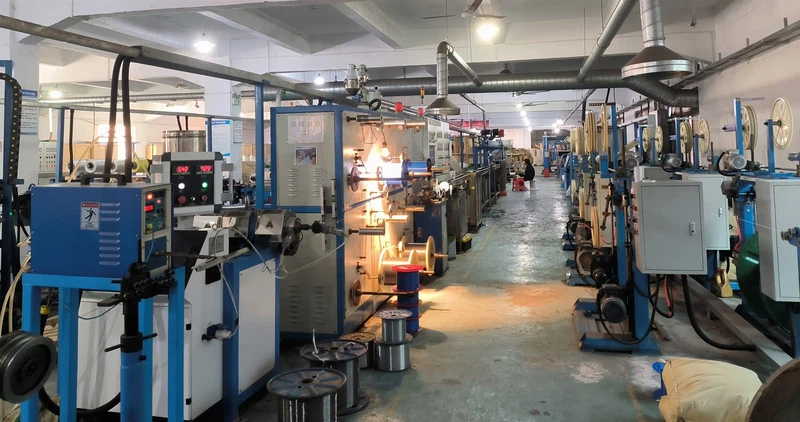
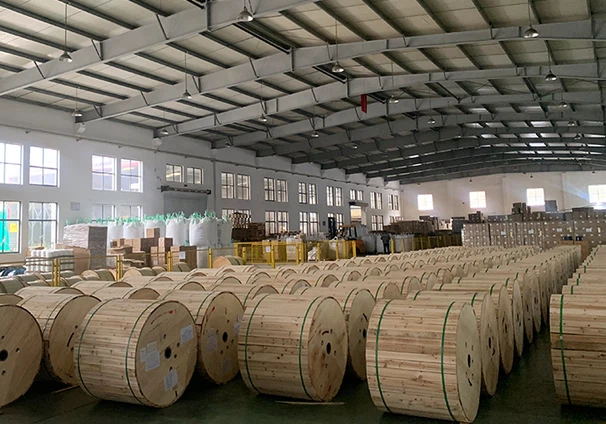
Hangzhou Junpu Optoelectronic Equipment Co.,Ltd . Which specializes in fiber to the home (FTTH) and HFC network for many years. Fiber optic communication equipment includes fiber optic terminal boxes, fiber optic splice boxes, FTTH optical drop-in lines, fiber optic patch cords, fiber optic splitters and EDFA wavelength division multiplexers. Junpu provides complete solutions of standard products or customized in FTTH field.
FAQ
Q: What is the purpose of a fiber optic splitter?
Q: What is the difference between a fiber optic coupler and a splitter?
Q: What is a fiber optic splitter?
Q: What is the typical size of a fiber optical splitter?
Q: How does a fiber optical splitter work?
Q: Can fiber optical splitters be cascaded or combined?
Q: What is the significance of the splitting ratio in fiber optical splitters?
Q: How is the splitting ratio of a fiber optical splitter determined?
Q: What is the difference between single-mode and multimode fiber optical splitters?
Q: Can Fiber optical splitters be used for bidirectional communication?
Q: What is the typical insertion loss of a fiber optical splitter?
Q: How does the insertion loss affect the performance of a fiber optical splitter?
Q: What is the return loss of a fiber optical splitter?
Q: How can the return loss of a fiber optical splitter be minimized?
Q: What is the maximum number of output ports that a fiber optical splitter can have?
Q: Can fiber optical splitters be used in outdoor environments?
Q: How can fiber optical splitters be protected from environmental factors?
Q: Can fiber optical splitters be repaired if they malfunction?
Q: How can the performance of a fiber optical splitter be tested?
Q: Can fiber optical splitters be upgraded or replaced?
As one of the most professional fiber optical splitter manufacturers and suppliers in China, we're featured by quality products and competitive price. Please rest assured to wholesale cheap fiber optical splitter for sale here from our factory. Contact us for OEM service.
1x16 Fiber Optic Splitter, Fiber Optic PLC Splitter