



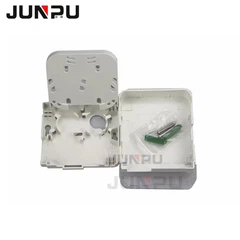
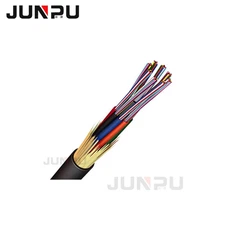


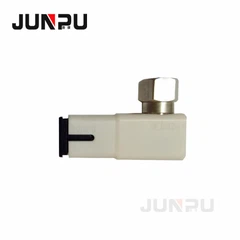


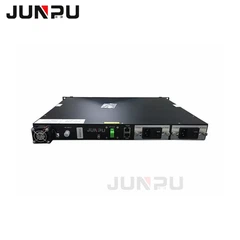

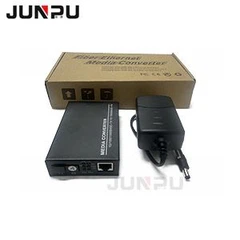



Optical Transmitter
What Is Optical Transmitter
An optical transmitter is an electronic device used in fiber-optic communication systems to convert electrical signals into optical signals for transmission over optical fibers. It typically includes a light source, such as a laser diode or LED, that emits light at a specific wavelength, and modulating circuitry that modulates the intensity or frequency of the light to encode the signal. The resulting optical signal is then coupled to an optical fiber for transmission to a receiver. Optical transmitters are an essential component of modern communication systems, enabling high-speed data transmission over long distances with low attenuation and interference.
Advantages of Optical Transmitter
High Speed: Optical transmitters can transmit data at a very high speed. They are capable of transmitting signals at Gigabit per second (Gbps) speed.
Long-Distance Transmission: Optical transmitters can transmit signals over long distances without losing signal quality or strength. They are ideal for long-haul communication links.
Noise Immunity: Optical transmitters are immune to electromagnetic interference (EMI) and radio frequency interference (RFI). This makes them ideal for use in environments with high electromagnetic interference.
Security: Optical transmitters are difficult to tap or intercept because they use light as a communication medium. This makes them more secure than traditional electrical-based communication systems.
Low Power Consumption: Optical transmitters consume very little power compared to electrical-based communication systems. This reduces the energy costs associated with communication.
Compact Size: Optical transmitters are relatively smaller in size than electrical-based communication systems. This makes them ideal for use in space-constrained environments.


Why Choose Us
Professional team
Professional sales team and engineer team provide professional technical Support,Test video and Sample support
Advanced Equipment
Equipment based on the latest technological developments has higher efficiency, better performance and stronger reliability.
One-stop Solution
With rich experience and one-to-one service,we can help you choose products and answer technical questions.
Innovation
We are dedicated to improving our systems continually, ensuring that the technology we offer is always cutting edge.
High Quality
Our products are manufactured or executed to very high standards, using the finest materials and manufacturing processes.
Competitive Price
We have professional sourcing team and cost accounting team, stive to reduce cost and profit and provide you a good price.
What Is The Function Of An Optical Transmitter
In addition to converting electrical signals into light signals, optical transmitters also play a critical role in controlling the power and shape of the optical signal. This is accomplished through a variety of techniques, including feedback control, modulation depth control, and bias current control. By controlling the power and shape of the optical signal, optical transmitters can optimize signal quality and ensure reliable transmission over long distances.
Another important function of optical transmitters is wavelength control. Optical fibers are capable of transmitting multiple signals simultaneously through different wavelengths of light. To facilitate this, optical transmitters must be capable of operating at specific wavelengths within the optical fiber spectrum. This is achieved through a variety of mechanisms, including the use of specialized laser diodes and tunable filters.
Optical transmitters can also be used to generate and transmit different types of optical signals, including analog, digital, and mixed signals. This versatility makes them suitable for a wide range of applications, including telecommunications, data communication, and optical sensing.
What Are The Main Components Of An Optical Transmitter
An optical transmitter is a device that converts electrical signals into optical signals that can be transmitted over a fiber optic cable. The main components of an optical transmitter include a semiconductor laser diode, an optical modulator, and a driving circuit.
The semiconductor laser diode is the light source of the optical transmitter, which emits light in the form of a narrow beam of electromagnetic radiation. The emitted light is typically in the infrared range and can be tuned to a specific frequency range. The laser diode is controlled by a driving circuit that adjusts the current applied to the laser diode to control the intensity and frequency of the emitted light.
The optical modulator is another important component of an optical transmitter, which is used to modulate the light signal with the electrical information. The modulator typically works by changing the intensity, phase, or polarization of the light signal in response to the electrical signal. This process allows for the transmission of digital data over the fiber optic cable.
Other components of an optical transmitter may include a temperature controller to stabilize the performance of the laser diode, a power amplifier to boost the output power of the signal, and a monitoring circuit to ensure the quality of the output signal. Overall, the optical transmitter is a sophisticated device that plays a critical role in the transmission of high-speed data over long distances using fiber optic cables.
What Kind Of Fiber Optic Cable Is Compatible With An Optical Transmitter
When it comes to choosing a fiber optic cable that is compatible with your optical transmitter, there are several factors to consider. Here are key points to keep in mind:
Type
The type of fiber optic cable you choose depends on the specific requirements of your optical transmitter. There are two main types of fiber optic cables
single-mode and multimode. Single-mode is generally used for longer distances and higher-speed applications, while multimode is used for shorter distances and lower-speed applications.
Core size
The core size of the fiber optic cable is another important consideration. This refers to the diameter of the fiber core, which can range from 8 microns to 62.5 microns. The core size can affect the distance the signal can travel and the amount of signal loss that occurs.
Wavelength
The wavelength of the optical transmitter is another critical factor to consider when selecting a fiber optic cable. Different types of fiber optic cables are designed to work with specific wavelength ranges, so it's essential to ensure that your chosen cable is compatible with your optical transmitter.
Bandwidth
Bandwidth is the amount of data that can be transmitted over a fiber optic cable. Higher bandwidth cables are typically more expensive but have the ability to transmit more data over longer distances.
Jacket material
The jacket material of the fiber optic cable is also important. Different types of jackets are designed to protect cables from various environmental factors, such as moisture, chemicals, and extreme temperatures.
Connectors
Ensure that the fiber optic cable you choose is compatible with the connectors on your optical transmitter. Different types of connectors are used for different applications, so it's essential to choose the right one for your needs.
The modulation methods of optical transmitters are usually divided into two categories, namely analog modulation and digital modulation.
There are two types of analog modulation. One is to use the analog baseband signal to directly modulate the intensity of the light source (D-IM); , frequency or phase, etc. to modulate, and then use the modulated subcarrier to intensity modulate the light source. The advantage of analog modulation is that the equipment is simple and the occupied bandwidth is narrow, but its anti-interference performance is poor, and the noise accumulates during relaying.
Digital modulation is the main modulation method of optical fiber communication. After sampling and quantizing the analog signal, the optical carrier is modulated on and off with a binary digital signal “1” or “0”, and pulse coding (PCM) is performed. The advantage of digital modulation is that it has strong anti-interference ability, and the influence of noise and dispersion does not accumulate during relaying, so it can realize long-distance transmission. Its disadvantage is that it requires a wider frequency band and the equipment is complicated.
According to the relationship between modulation mode and light source, there are direct modulation and external modulation. The former refers to directly using electrical modulation signals to control the oscillation parameters (light intensity, frequency, etc.) of the semiconductor light source to obtain the amplitude modulation wave or frequency modulation wave of the optical frequency, which is also called internal modulation; the latter is to let the light source output the amplitude and frequency. The constant optical carrier passes through the optical modulator, and the optical signal modulates the amplitude, frequency and phase of the optical carrier through the modulator. The advantage of direct modulation of the light source is that it is simple, but the modulation rate is affected by the carrier lifetime and the high rate. Limits on performance degradation (eg frequency chirp, etc.).
The external modulation method requires a modulator, and the structure is complex, but it can obtain excellent modulation performance, especially suitable for high-speed applications. According to the parameters of the modulated light wave, it is divided into intensity modulation, phase modulation, polarization modulation, etc. The most widely used in optical fiber communication are baseband direct intensity modulation, subcarrier intensity modulation and digital modulation of the light source, and external modulation is used at high rates.
What Factors Can Affect The Data Transmission Rate Of An Optical Transmitter
The data transmission rate of an optical transmitter depends on various factors that affect its performance. These factors can include the following:
Optical Power
The signal strength of the optical transmitter must also be strong and stable to promote faster and reliable data transmission. If the optical power is too low, it can cause signal distortion and slow transmission rates.
Wavelength
The wavelength of light used for communication affects the data transmission rate of an optical transmitter. Different wavelengths have different transmission rates, so the choice of wavelength is crucial for optimum performance.
Fiber Dispersion
Dispersion in the fiber optical cable used in the transmission process contributes to the data transmission rate of the optical transmitter. When light travels through the fiber cable, it spreads out, and this phenomenon is called dispersion.
Noise
Noise in the transmission channel affects the efficiency of data transmission and can lead to errors in communication. Optical transmitters with low noise levels have a higher data transmission rate.
Operating Temperature
The operating temperature of the optical transmitter affects its efficiency and, by extension, the data transmission rate. A higher temperature leads to faster data transmission.
Fiber Optic Cable Length
The length of the fiber optic cable affects the distance over which data can be transmitted. Longer cables cause attenuation and limit the data transmission rate, while shorter cables lead to faster transmission rates.
Working Principles Of The Optical Transmitter
The most important optical device in the optical transmitter is the semiconductor laser. it is a laser diode (LD). some do not use laser diodes but use semiconductor light-emitting diodes (Light Emitting Diode, LED)of.
1310nm optical transmitter generally adopts direct modulation mode (vestigial sideband-amplitude modulation, VSB-AM mode). Its function is to convert electrical signals into optical signals, which can be achieved by changing the power supply of the injected laser through an external circuit. The bias circuit it sets can provide the best bias power supply for the laser. The laser will have different power output when the bias current is different.
To ensure a stable output of optical power, an automatic control circuit for optical power and laser temperature should be designed, Such as the use of microcomputers to achieve the best working state of automatic control of the optical transmitter.Lasers are widely used as optical oscillators (ie, light-emitting devices), which rely on the interaction between the energy state of the laser medium material and light.
In order for the laser to work, there must be a certain amount of current. There is a certain relationship between the size of this current and the light intensity. When the current is increased, the light intensity increases sharply. This indicates that the laser has started to work. This makes the laser work. The current is called the threshold current. The smaller it is, the better, because it has already enabled the laser to work.
If the threshold current continues to increase, the output saturation zone will be formed. When the saturation zone current reaches a certain value, the signal will be transmitted. In terms of the power required for optical fiber transmission, the output power of several megawatts in the linear region can meet the requirements of long-distance transmission of signals and information. In addition to the amount of light intensity, the transmission quality of light is also related to problems such as spectrum and noise.
The multi-wavelength spectrum is not suitable for the transmission of high-quality analog signals. Even if it works in a single-mode, its emission spectrum has a width. The narrower the width, the purer the light wave becomes and the more time-coherent it becomes. That is light waves with good coherence. The light wave with good coherence does not need lenses and other devices to converge it into a small spot, and it is more suitable for the incidence of optical fibers.
How Does An Optical Transmitter Convert Electrical Signals Into Optical Signals
Optical transmitter refers to a device that translates electrical signals into optical signals that can be transmitted over a fibre-optic cable. In principle, an optical transmitter operates by modulating the electrical current produced by a light-emitting diode (LED) or a laser diode. The modulated electrical signal is then transformed into a modulated optical signal, which can be sent through the optical fibre.
The process of transforming an electrical signal into an optical signal starts with a current driver that controls the power of a laser diode or LED. The current driver makes sure that the laser diode or LED emits light with the desired intensity and frequency. The intensity and frequency of the light emitted by the laser diode or LED is directly regulated by the current applied to the diode.
Once the current has been modulated to match the electrical signal, the optical signal is created by channeling the light into an optic fibre via a lens. The modulated optical signal is then transmitted through the optic fibre to the destination.
The power of an optical transmitter is a crucial parameter that determines the amount of signal strength it can deliver to the optical fiber. The power measurement is usually done using a power meter, which is designed specifically for measuring optical power in milliwatts (mW) or decibels (dB). Optical power meters are highly sensitive devices that can measure the intensity of light emitted by the transmitter.
To measure the power of an optical transmitter, a fiber optic patch cable is connected between the transmitter and the power meter. The power meter is then switched on, and the light signal from the transmitter is detected by a photo-receptor. The signal is then converted into a measurable electrical signal, which is displayed on the power meter. The power meter may also have additional features such as wavelength measurement and attenuation measurement.
During the measurement process, it is important to ensure that the power meter is calibrated and that the measurements are taken consistently to get accurate results. The power levels of optical transmitters vary depending on the type of transmitter, the wavelength it operates at, and the type of optical fiber used in the network. It is therefore essential to specify the power budget requirements for the network design to ensure that the signal is transmitted at the desired power levels.
Maintenance Tips for Optical Transmitter
Here are tips for maintaining optical transmitters:
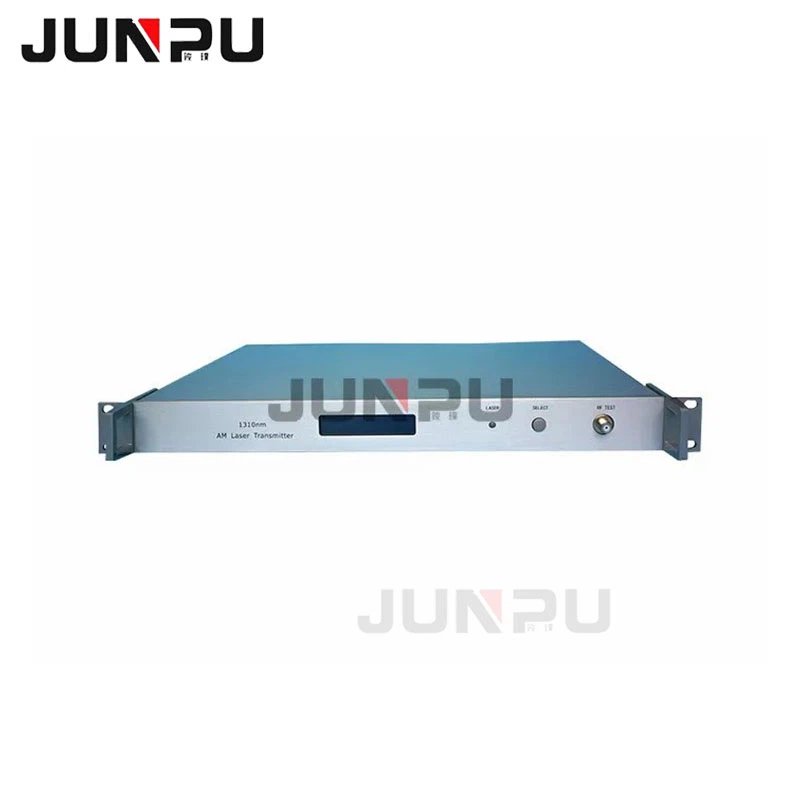

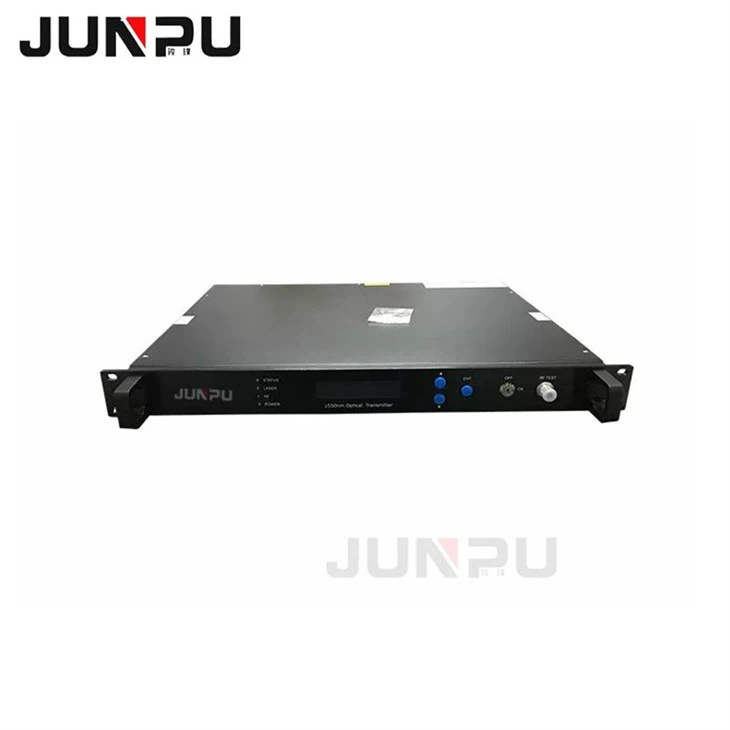
1. Regular Cleaning
The optical transmitter should be kept clean by regular dusting and wiping with a clean, dry cloth. Any dirt or dust particles that may accumulate on the transmitter may cause attenuation of the optical signal, resulting in reduced performance.
2. Temperature Control
The temperature of the optical transmitter plays a critical role in its performance. Proper temperature control should be maintained to prevent overheating or damage to the transmitter.
3. Power Supply Monitoring
The power supply to the optical transmitter should be regularly monitored to ensure that the voltage and current levels are within the recommended range.
4. Regular Inspection
The transmitter should be regularly inspected to identify any signs of damage or wear and tear. Any damaged parts should be replaced promptly to prevent further damage.
5. Proper Handling
Proper handling of the transmitter is crucial in maintaining its performance. It should be handled carefully to avoid any damage or mishandling that may affect its performance.
6. Calibration
The optical transmitter should be calibrated periodically to ensure that it is operating at the desired performance level. This helps to ensure accurate and reliable transmission of optical signals.
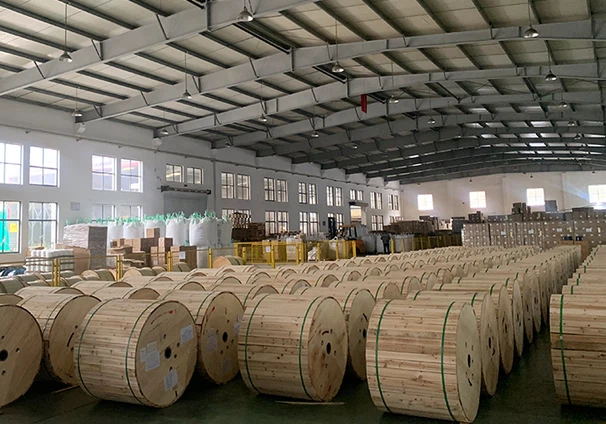
Our Factory
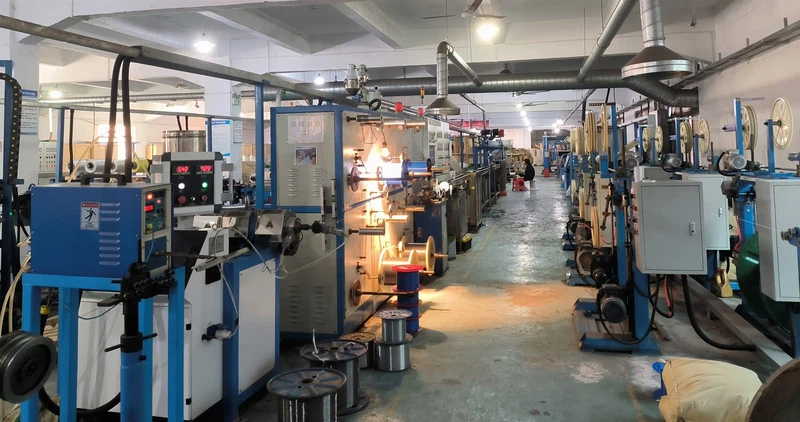
Hangzhou Junpu Optoelectronic Equipment Co.,Ltd . Which specializes in fiber to the home (FTTH) and HFC network for many years. Fiber optic communication equipment includes fiber optic terminal boxes, fiber optic splice boxes, FTTH optical drop-in lines, fiber optic patch cords, fiber optic splitters and EDFA wavelength division multiplexers. Junpu provides complete solutions of standard products or customized in FTTH field.
FAQ
Q: How does an optical transmitter work?
Q: What is an optical transmitter?
Q: What are the main components of an optical transmitter?
Q: What is the difference between a laser and an LED in an optical transmitter?
Q: What are the advantages of optical transmitters over traditional electrical transmitters?
Q: What is the function of the driver circuit in an optical transmitter?
Q: How does an optical transmitter handle different data rates?
Q: What is meant by the term "modulation" in the context of optical transmitters?
Q: What are the different types of modulation schemes used in optical transmitters?
Q: How is optical power managed in an optical transmitter?
Q: What are the safety considerations when working with optical transmitters?
Q: What are the environmental specifications for optical transmitters?
Q: What is the impact of temperature on optical transmitters?
Q: How do optical transmitters compensate for losses in optical fibers?
Q: What is meant by the term "bit error rate" (BER) in the context of optical transmitters?
Q: What are the different types of optical transmitters?
Q: What is the difference between direct and external modulation in optical transmitters?
Q: What is the function of an optical transmitter
Q: How does an optical transmitter modulate an optical signal?
Q: How is the output power of an optical transmitter controlled?
As one of the most professional optical transmitter manufacturers and suppliers in China, we're featured by quality products and competitive price. Please rest assured to wholesale cheap optical transmitter for sale here from our factory. Contact us for OEM service.
1 Core Fiber Optic Drop Cable, Fiber Optic PLC Splitter, 1550nm EDFA WDM