












Development and application of special optical cable technology driven by AI
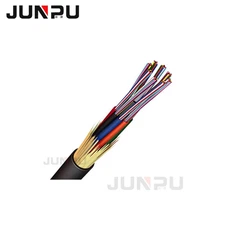
Special optical cables are optical cables with special properties and uses compared to ordinary optical cables (or conventional optical cables). They are widely used in power, communications, petroleum, aerospace, military and other fields, and play a key role in information transmission and energy supply in modern society. With the continuous advancement of science and technology, various industries have increasingly higher performance requirements for special optical cables, which not only require them to have higher transmission rates, larger capacities and stronger anti-interference capabilities, but also require them to be able to adapt to complex and changing environmental conditions.
AI technology has injected new vitality into the development of special optical cable technology with its powerful data analysis, pattern recognition and intelligent decision-making capabilities. By applying AI technology to the design, manufacturing, operation and maintenance of special optical cables throughout their life cycle, it is possible to optimize the performance of special optical cables, improve production efficiency, and accurately diagnose and predict faults, thereby meeting the growing market demand and promoting the high-quality development of related industries.
Key technologies and performance indicators of special optical cables
(1) Key technologies The manufacture of special optical cables involves key technologies in multiple fields such as optical fiber technology, material science, and mechanical design. Among them, the fiber drawing technology determines the quality and performance of the optical fiber. High-precision drawing equipment can produce low-loss, high-bandwidth optical fibers. The structural design of the optical cable requires the rational selection of materials and structural forms according to different application scenarios to ensure the stability and reliability of the optical cable in various environments. In addition, the splicing and connection technology of the optical cable is also an important factor affecting its performance. High-quality splicing and connection can reduce signal loss and improve communication quality.
(2) Performance indicators The performance indicators of special optical cables mainly include attenuation, bandwidth, mechanical properties, environmental adaptability, etc. Attenuation refers to the energy loss of optical signals when they are transmitted in optical cables. Optical cables with low attenuation can achieve longer distance transmission. Bandwidth determines the information capacity that the optical cable can transmit. Optical cables with high bandwidth are suitable for high-speed data transmission. Mechanical properties include tensile strength, bending performance, compressive resistance, etc., to ensure that the optical cable will not be damaged during installation and use. Environmental adaptability requires that the optical cable can work normally under different environmental conditions such as temperature, humidity, pH, etc.
Future development prospects
1. The depth and breadth of the integration of AI and special optical cable technology will be expanded. With the continuous development and maturity of AI technology, its integration with special optical cable technology will be deeper and more extensive. In the manufacturing field, AI will realize the intelligent control of the entire process of special optical cable production, further improving production efficiency and product quality; in terms of performance optimization, AI will help develop special optical cable materials and structures with better performance and more powerful functions; in the field of operation and maintenance, AI will realize the intelligent management of the entire life cycle of special optical cables and improve the reliability and stability of the network.
2. The development of new application scenarios With the development of emerging technologies such as 5G, Internet of Things, and artificial intelligence, special optical cables will usher in more application scenarios. For example, in smart grids, special optical cables will serve as the key transmission medium of the power Internet of Things to realize real-time monitoring and intelligent control of power equipment; in intelligent transportation, special optical cables will be used in the fields of vehicle networking, smart roads, etc., supporting high-speed and reliable communications; in the industrial Internet, special optical cables will provide stable network connections for industrial automation and intelligent manufacturing. AI technology will provide strong support for the application of special optical cables in these new application scenarios and promote the development of related industries. 3. Improvement of the industrial ecology The development of special optical cable technology driven by AI will promote the improvement of the relevant industrial ecology. On the one hand, it will drive the coordinated development of various links in the industrial chain, such as AI technology providers, special optical cable manufacturers, system integrators, and operation and maintenance service providers, to form a closer cooperative relationship; on the other hand, it will attract more scientific research institutions, universities and enterprises to participate in the research and development and innovation of special optical cable technology, and promote the continuous advancement of technology and the continuous expansion of applications. At the same time, with the expansion of the scale of the industry, related standard formulation, testing and certification services will also continue to improve to provide guarantees for the healthy development of the industry.
Conclusion
The development of AI technology has brought new development opportunities and changes to special optical cable technology. Through its application in intelligent manufacturing, performance optimization, fault diagnosis and predictive maintenance, AI technology has significantly improved the production efficiency, product quality and operation and maintenance level of special optical cables. However, in the process of integrating AI and special optical cable technology, it also faces challenges such as data quality and security, adaptability and explainability of AI algorithms, talent shortage and difficulty in technology integration. In the future, with the continuous advancement of technology and the gradual resolution of related problems, the integration of AI and special optical cable technology will be more in-depth and extensive, open up more application scenarios, improve the industrial ecology, and make greater contributions to the development of communications, energy and other fields. Relevant enterprises and scientific research institutions should seize opportunities, increase R&D investment, actively respond to challenges, and promote the continuous development of special optical cable technology driven by AI.