




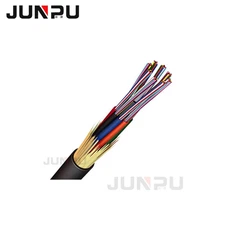







In the data center field, there are mainly two forms: optical interconnection and copper interconnection. The biggest difference between the two lies in the transmission medium. The optical interconnection solution converts the electrical signal into an optical signal before transmitting it; the copper interconnection uses the conductivity of copper to directly transmit the electrical signal.
At present, with the explosive growth of AI's demand for GPU cluster computing power, optical interconnection plays a key role in building the Wanka cluster of the intelligent computing center. Data shows that AI large model training requires supercomputing cluster interconnection, and a single GPU server needs to be equipped with 6 to 8 optical modules. Nvidia's procurement volume of 1.6T modules in 2025 may reach 600,000. In addition, with the continuous breakthroughs in optical module technology, the transmission rate from 400G to 800G and even 1.6T has become a reality, and the optical module market has grown at an astonishing rate.
As an important component of optical fiber communication, optical modules are optoelectronic devices that realize the functions of photoelectric conversion and electro-optical conversion during optical signal transmission. Cignal AI predicts that from 2021 to 2025, 400ZR coherent optical modules will increase 10 times in four years. From 2024, 800ZR will gradually be commercialized and grow rapidly, while 1600ZR will start commercialization from 2027.
According to Soochow Securities, when the number ratio of equivalent 800G optical modules to H100 is 3/4/5/6 respectively, the cumulative stock market space of global AI optical modules will be 720 billion/960 billion/1200 billion/1440 billion US dollars respectively by 2030.
From the perspective of market trends, the iteration cycle of optical module technology is accelerating. In the data center field, the rate of direct adjustment and direct inspection optical modules is updated every 3 to 4 years. With the introduction of AI intelligent computing, the iteration cycle is shortening. The current mainstream rate is 800G optical modules, and 1.6T optical modules are expected to be commercialized in 2025. At the same time, it is expected to enter the 1.6T era in the next 1 to 2 years, and 3.2T will be commercialized on a large scale by 2030. In the field of trunk networks, the rate update cycle of coherent optical modules is relatively long, about one generation every 10 years; it is currently in the single-wave 400Gb/s stage and is expected to reach 800G by 2030.
Domestically, policies have begun to lean towards 400G/800G all-optical connections, which has also pressed the "accelerator" for the outbreak of the entire industry. On January 6, 2025, the National Development and Reform Commission, the National Data Bureau, and the Ministry of Industry and Information Technology jointly issued the "Guidelines for the Construction of National Data Infrastructure". It clearly points out that network facilities and computing facilities need to adapt to the demand for data value release and upgrade to high-speed data transmission and efficient computing power supply. It is particularly critical to promote 400G/800G high-bandwidth all-optical connections between national hub nodes and demand areas, guide telecom operators and others to improve the efficiency of "public transmission channels", and promote the deep integration of computing and networks.