











Consistent with the analysis in CRU's Optical Fiber and Cable (OFC) Market Outlook and OFC Monitoring Report, the topic of the recovery of the US market continued to dominate the meeting, including the timeline and implementation strategy of the Broadband Equity, Access and Deployment (BEAD) project, the expansion of local optical cable companies' capacity and the challenges they encounter, and the rapid changes in end-use markets (such as data centers).
The BEAD program aims to narrow the digital divide and promote broadband access across the United States by providing a large amount of government funding. According to CRU's OFC analysis report, 32 state governments have completed all ten stages of the program approval, and another 23 states are on the verge of completion. The basis for the successful implementation of the program is the Spectrum & National Security Act, which was debated in the Senate in April 2024 and is still under discussion.
Alan Davidson, chief of the National Telecommunications and Information Administration (NTIA), announced a recommendation document at the conference that states should be allowed to use alternative technologies for BEAD projects to speed up the project process, including fixed wireless services and wireline solutions. This development reflects the financial and practical limitations faced in extending fiber to every uncovered area, especially in extremely remote areas. Currently, the leading telecom operators are still optimistic that BEAD funds will be available in time; however, some small and medium-sized network operators are gradually losing confidence in the program's timeline and are focusing on using private funds to expand their networks.
To promote digital equality, the US government has allocated more than $1 billion, of which $840 million is specifically for state-level projects. However, labor supply remains a major challenge. The industry more broadly pointed out that in order to implement fiber broadband infrastructure projects in the United States, 78,000 jobs need to be hired, but labor shortages continue to hinder the progress of its projects. In addition to the doubts about the BEAD project, important updates on whether the Affordable Connectivity Program (ACP) can be restored were also mentioned at the conference. Since June 2024, the ACP has been in limbo due to the failure of an additional funding bill to pass, which has led some operators to be reluctant to roll out broadband in remote areas. Since then, the Senate Commerce Committee recently advanced an amendment proposing $7 billion to fund the ACP, which is part of the Broadband Initiative Act. This measure is intended to streamline federal broadband programs and extend funding for the ACP.
In his keynote, Eric Lia of Verizon highlighted the significant challenges of expanding broadband networks in rural areas. In the United States, approximately 8.8 million people are not served due to the high cost of deploying long-distance and last-mile fiber optic cables. The limitations of existing infrastructure and the rising costs of increasing fiber optic cable lengths are the main obstacles to the expansion of fiber broadband. In addition, securing real estate resources in key network centers and dealing with different regulations in different states increase the complexity of deployment, making the entire challenge more severe.
Dr. Duncan of Qubitek emphasized the revolutionary potential of quantum computing in improving network efficiency and security. The combination of artificial intelligence and this technology promises great potential, but it also requires a lot of electricity. Quantum computing offers better energy efficiency than traditional methods. In addition, quantum technology can significantly enhance the security of communications, which is essential for the transmission of sensitive data. Dr. Duncan did not rule out the possibility that quantum computing centers across the United States will need to be connected by long-distance optical cables in the future.
The conference also highlighted the development trend of fiber-to-the-home (FTTH) installation, especially the shift to more efficient and future-proof solutions. Although pre-connectorized cables can provide quick installation and stable quality, fusion splicing technology is still preferred due to its economic benefits and future adaptability.
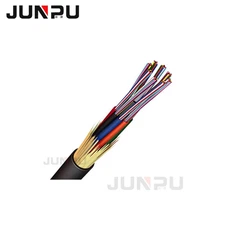
In addition, companies such as Corning, AFL and STL are gradually promoting the widespread application of high-density blown-in fiber cables and drop cables in North America, using bend-insensitive single-mode fibers such as G.657.A2 and reducing fiber diameters from 200 microns to 190 microns or even lower. These developments have also led to more attention on the use of microducts, as the above-mentioned optical cable solutions are suitable for a wide range of application requirements from backbone networks to FTTx. However, in the US market, the current capacity problems of installers have led to high inventory levels that have not been fully alleviated since last year, so the circulation of optical fiber and cable products is still limited.
Additionally, attendees at the conference highlighted the urgent need to increase mid-haul fiber cable assets in the U.S., as both vendors and installers stressed the importance of providing redundancy and competitive options. They emphasized keeping mid-haul infrastructure as short as possible to reduce latency and ensure high-speed transmission.
On the product side, companies have made extensive innovations in fiber broadband access platforms. Currently, XGS-PON technology is widely deployed, providing up to 10 Gbps of capacity (actually closer to 8.5 Gbps). Some companies are moving towards 25G PON to provide true 25 Gbps speeds, and even 50G PON, but it is still in the lab testing stage and is not yet ready for field applications. On the deployment side, companies such as OFS are at the forefront of pushing the limits of installation, providing a comprehensive core product line for multi-dwelling units (MDUs) and single-dwelling units (SFUs). Their product line speeds up fiber arrival and installation inside MDUs and SFUs, including their EZ-Bend® cables, Mini LT and Mini TB drop cables, and field termination options, including EZ!Connector connectors, EZ!Fuze™ connector splices, and their Fitel Ninja, S-154 and S-179+ splicers. FiberConnect 2024 Key Takeaways The North American fiber optic cable communications industry faces significant labor shortages and challenges in laying the environment, especially in the advancement of new infrastructure. More than 60% of the current workforce is about to retire, and new technicians and field installation workers are urgently needed. In addition, different environmental permit requirements in various states in the United States have delayed project approvals and increased costs. These challenges require coordinated efforts from all parties, such as cultivating a skilled workforce and simplifying regulatory processes, to support industry growth.
Currently, the rapid growth of data center business driven by AI and other end markets is boosting demand for optical cables. But looking at the entire North American fiber optic cable market, current market data shows that the supply side is performing well. While demand for optical cables is gradually recovering and growing, inventories of some products have not yet been fully consumed. Currently, this growth is still particularly evident in urban areas, where the demand for high-speed Internet and data transmission is the highest.
Subsequently, the US fiber optic cable market has shown resilience and growth, thanks to the growing demand for high-speed fiber broadband and mobile networks and the expansion of data centers. Continued investment in rural broadband and BEAD projects will further promote this growth in the future. In urban areas, significant growth in data center construction supports the rising demand for AI and cloud computing. Continuous advances in optical communication technology, including smaller diameter optical cables and improved installation methods, are improving network efficiency and reducing costs, laying the foundation for continued growth in the industry.