




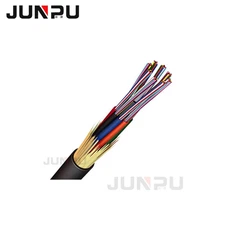








In the marine sector, with the advancement of globalization and the development of the marine economy, the marine communications track has gained more and more international favor. The marine economy covers multiple fields such as marine transportation, marine resource development, and marine environmental protection. The development of these fields requires the support of marine communication technology-and marine communications require submarine cables as the basic medium for information dissemination. This article briefly discusses the situation of submarine optical cables and submarine cable laying ships. "Submarine cable" is a general concept, which can be mainly divided into submarine communication optical cables (commonly known as "submarine optical cables"), submarine power cables (commonly known as "submarine electric cables"), and marine engineering cables (commonly known as "marine engineering cables").
Submarine optical cables are mainly used for communication, but the structure may contain electrical units for supplying power to underwater facilities; submarine electric cables are mainly used for transmitting electricity, but the structure may contain optical units for communication and sensing; the structure of marine engineering cables often contains units for transmitting communication, power, signals and/or liquids at the same time and may be laid vertically. Unlike the laying of optical cables on land, the construction of submarine cables requires the participation of submarine cable laying ships. A submarine cable laying vessel is a special ship used for laying and repairing submarine cables. In addition to the necessary navigation and positioning functions, it is usually equipped with cable storage pools or cable laying equipment, gantry cranes, underwater burying plows, underwater robots and other special equipment to lay submarine cables on the seabed or bury them on the seabed.
However, from the perspective of the entire submarine cable market, with the dramatic increase in international interconnection bandwidth, the global submarine cable market has also entered a period of replacement of the old with the new, which will bring a new upsurge in the investment and construction of submarine cables in the field of marine communications. At present, about 30% of submarine cables are approaching the end of their service life and need maintenance and replacement. Therefore, first of all, the submarine cable market will usher in a golden period of development. In addition, the submarine cable laying ship segment, as a new and promising industry in China, will also usher in fertile ground for development. We also hope that my country's industry enterprises can continue to break through and have more "voice" in the international field of the ocean, and reap fruitful results.