



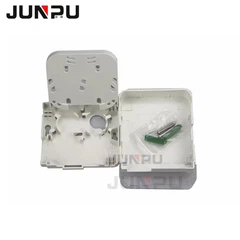
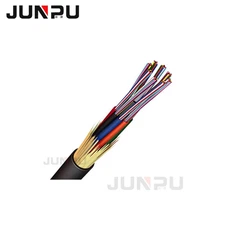


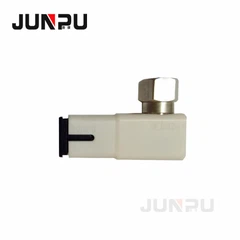





What should I do if the optical fiber is accidentally broken during operation? This is a common thing in the daily operation of weak current projects.
If the optical fiber is broken, you need to connect two optical fiber lines together, because the optical fiber is made of quartz and cannot be directly tied like an electric wire. At this time, you must use professional equipment ranging from several thousand yuan to tens of thousands of yuan for hot connection, but not all friends have optical fiber fusion machines.
1. Optical fiber cold connection method
Is there any other way? Then you can only use the cold connection method!
Optical fiber is generally connected by three wires, but the real optical fiber is the one sandwiched in the middle. The main function of the two sides is to protect the optical fiber in the middle, because the optical fiber is very brittle and easy to break, so it needs to be protected by "bodyguards".
Sometimes, there may be two or three optical fibers in the middle, then we only need to use the blue one, and break the extra one.
2. Optical fiber cold connection steps
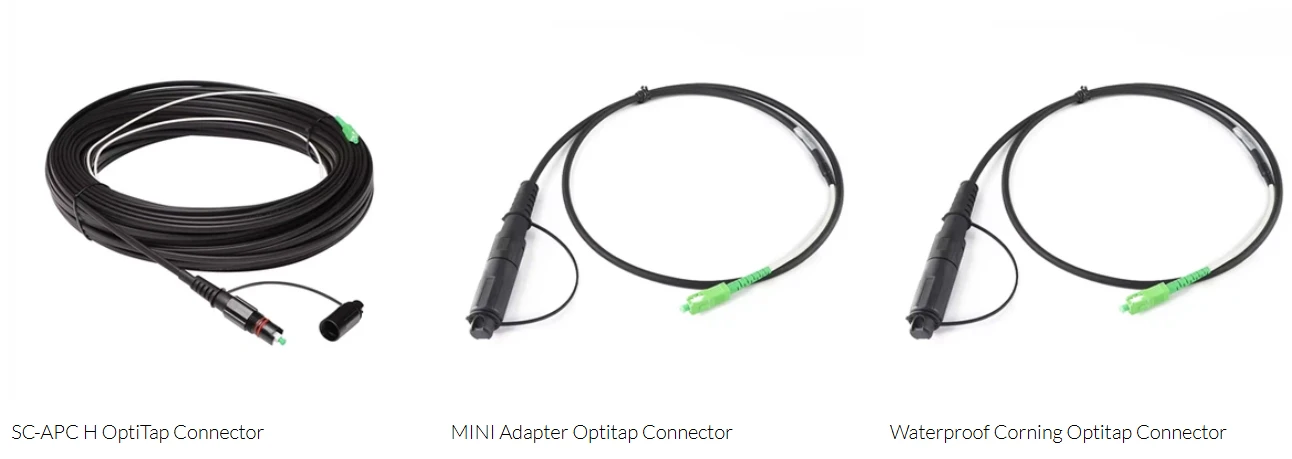
Now the optical fiber into the home uses a sheathed optical cable, and a cold connector is used at the end. The so-called cold connection is to strip and cut the optical fiber, align it with the cold splice, and fix it. The cold splice is more convenient and does not require a fusion splicer.
The cold connection of fiber-to-the-home mainly includes five steps: stripping, cleaning, cutting, cold connection and testing.
1. Stripping
Unscrew the cold splice tail tube, and then insert the optical fiber into the tail tube
Use a stripper to peel off the PVC layer and cut off the reinforcing ribs at the same time.
Then use the smallest aperture of the fiber stripper to remove the coating
2. Cleaning
Use a non-woven cloth dipped in anhydrous alcohol to clean the bare fiber
3. Cutting
Cut the fiber clamp together with the fiber on the clamp seat of the fiber cleaver
4. Cold connection
Put the fiber into the cold connector body
5. Test
Use a fiber test pen to test the conduction state
Although fiber cold connection seems simple, it is also a technical job. There are many precautions in the installation process:
A. During the entire installation process of the connector, each link must be cleaned
B. Ensure the quality of the on-site fiber cutting end face
C. The close fit between the on-site fiber and the two end faces of the pre-buried fiber is the key to successful termination
D. The length of the fiber cut on-site must be accurate. If the on-site fiber length is not enough and does not contact the short fiber pre-polished in the factory, there will be a gap between the end faces, increasing the termination loss.
E. The length of the optical fiber cut on site should be accurate, the fiber should be inserted in place, the optical fiber should be bent reasonably, and the two end faces should be tightly attached to ensure the end face contact. At the same time, avoid the optical fiber being too long, causing excessive end face pressure and damage to the optical fiber end face.
3.The difference between optical fiber cold connection and hot melting
I. Hot melting
It is necessary to use an optical fiber fusion splicer and an optical fiber cutter to connect the two optical fibers. No other auxiliary materials are required. The advantages are stable quality and small splicing loss (about 0.05 to 0.08db). The disadvantages are that the equipment cost is too high, the equipment's power storage capacity is limited, and field operations are restricted. In short, the fusion quality is good and the attenuation is low, but the operation is troublesome and a fusion splicer is required.
2. Cold splice
It does not require too much equipment, just a fiber cutter, but each joint requires a quick connector. The advantage is that it is easy to operate and suitable for field operations. The disadvantage is that the loss is relatively large, "about 0.2 to 0.5dB cold splice at each point", there is no room for choice in business and technical services. Secondly, matching liquid is used in cold splices. Due to the small use and short time, the aging problem needs time to test.
In short:
1. The cost of a single cold splice is much higher than that of hot melting.
2. The tools for cold splicing are more convenient to carry, while hot melting requires carrying a hot melting machine. It is very inconvenient.
3. The optical fiber loss after hot melting is lower, and the optical fiber joint loss of cold splices is relatively large.