










How to choose a fiber fusion splicer? Although we have mentioned the selection of fiber fusion splicers before, we have not analyzed the parameters of fiber fusion splicers. Today, let's take a detailed look at how to choose a fiber fusion splicer.
With the advent of 5G fiber access, countries around the world have begun to lay optical fibers, which has also spawned a group of fiber fusion splicing engineering teams. When you first come into contact with this industry, you may not know how to choose a fiber fusion splicer. What are the parameters of the fiber fusion splicer and what are their functions?
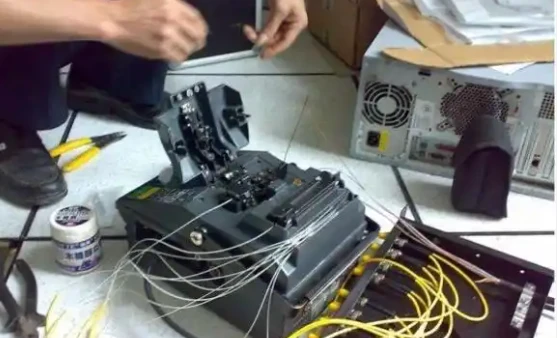
Parameters of fiber fusion splicers
To choose a fiber fusion splicer, you must first understand the parameters of the fiber fusion splicer.
1. Applicable fiber core number: generally single core, most of the fiber fusion splicers on the market are single core splicers, that is, they can only splice one optical fiber; the other is a ribbon fiber fusion splicer, which can splice multiple optical fibers at the same time, and a ribbon fiber fusion splicer can splice up to 12 cores at a time.
2. Fusion time: Fusion time refers to the time it takes for the fiber to be placed in the fiber fusion splicer, and the fiber fusion splicer to push and align, discharge and fuse. The shorter the fusion time, the better.
For example, if it takes 5 minutes to fuse once in an hour, you can only fuse 12 cores; others fuse once in one minute, and can dissolve 60 cores in an hour. Currently, the fusion time on the market is within 10 minutes.
Don't think that the fusion time is not important. This is directly related to your workload, that is, your income. Others can melt 300 cores a day, but you can only melt 200 cores a day, which reduces the effect. Fiber optics are generally charged according to the number of fusion cores, and the workload of one day determines the income of one day.
When the workload is relatively large, the time advantage of the fiber fusion splicer comes into play.
3. Heating time: After the fiber fusion is completed, it needs to be protected by a heat shrink tube. After the heat shrink tube is wrapped around the fusion point, the heat shrink tube needs to be heated. The shorter the time, the better; the current fusion splicer is about 20 seconds. In cold weather, the heating time is long, and the number of cores that can be spliced by the splicer is small. This is not surprising in winter.
4. Splicing loss: As we all know, optical fiber is used for optical signal transmission. After the splicing point is spliced, the signal will be lost. The quality of the optical fiber splicer mainly depends on the loss value after splicing. The smaller the better. At present, the splicing loss of splicers on the market is about 0.02db.
5. Battery power supply: The larger the battery capacity, the longer the time it takes to charge once, just like the battery capacity of a mobile phone.
6. Operating environment: such as altitude, temperature, etc.; if it is in a special area such as a very cold place, because the optical fiber splicer needs to discharge, the temperature and altitude must be considered; the larger the supported range, the better the machine.
7. Machine life: If it is the life of the splicer, under normal splicing conditions, the domestic splicer can be used for 3 years, and the imported one can be used for five years. The average splicing is about 150 per day, and the average working days are 200 per year. It is estimated that a splicer can melt 80,000-120,000 cores. Pay attention to do some maintenance every six months.
8. Fiber magnification: This parameter can be used as a reference for the function of a fiber fusion splicer. The larger the magnification, the more accurate the fiber fusion splicer may be and the lower the loss will be.
Fiber fusion splicer brand
In addition to looking at the parameters, you should also look at the brand when choosing a fiber fusion splicer. The basic way is to look at the brand first, determine the brand, and then choose the appropriate fusion splicer model according to the parameters within the brand.
You can choose a fusion splicer that suits you according to your budget.