



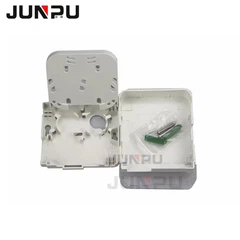








To detect the tightness of the fiber optic splice box, the following methods can be used:
1. Water immersion method
The water immersion method is a traditional detection method. The fiber optic splice box is immersed in water to observe whether there are bubbles. If bubbles come out, it means that the fiber optic splice box is not well sealed and there is gas leakage. If no bubbles come out, it means that the fiber optic splice box is well sealed. This method is simple and easy to use, but the accuracy is low and the degree of leakage cannot be quantified.
2. Pressure test method
The pressure test method is a more accurate detection method. By inflating the fiber optic splice box, the air pressure in the box is measured using a pressure gauge. If the air pressure in the box remains unchanged for a certain period of time, it means that the fiber optic splice box is well sealed. If the air pressure gradually decreases, it means that the fiber optic splice box is not well sealed and there is gas leakage. This method can quantify the degree of leakage, but it requires professional equipment and technicians to operate.
3. Wireless pressure sensor method
The wireless pressure sensor method is an advanced detection method. By installing a wireless pressure sensor in the fiber optic splice box, the air pressure changes in the box are monitored in real time. If the air pressure remains stable, it means that the sealing of the fiber optic splice box is good. If the air pressure changes, it means that the sealing of the fiber optic splice box is not good and there is gas leakage. This method can monitor the sealing of the fiber optic splice box in real time, and there is no need to open the box cover, which reduces the damage to the fiber optic splice box.
4. Thermal imaging method
Thermal imaging method is an emerging detection method. By using a thermal imager, the temperature difference inside and outside the fiber optic splice box can be intuitively seen. If the sealing of the fiber optic splice box is not good and there is gas leakage, a clear temperature difference will be shown on the thermal imaging map. This method can intuitively detect the sealing of the fiber optic splice box, and there is no need to touch the fiber optic splice box, which reduces the damage to the fiber optic splice box.
Conclusion
The above four methods can be used to detect the sealing of the fiber optic splice box, each with its own advantages and disadvantages. In practical applications, the appropriate method can be selected for detection according to the specific situation. Regardless of which method is used, it is very important to regularly detect the sealing of the fiber optic splice box, which can effectively prevent and solve the problem of poor sealing of the fiber optic splice box, thereby ensuring the stable operation of the fiber optic communication network.