











Confused between a Fiber Junction Box and a Distribution Box? Junpu explains the uses, differences & helps you choose the right one for your FTTx project. Get expert advice!
In fiber optic networking, terminology can sometimes be confusing, and the terms "Fiber Optic Junction Box" and "Fiber Optic Distribution Box" are often used interchangeably. However, for network planners and engineers, understanding the subtle but important differences is key to selecting the right product for the right application and ensuring a clean, efficient network architecture.
While both are protective enclosures, their primary functions and typical placement within the network differ.
Fiber Optic Junction Box: The Mid-Span Protector
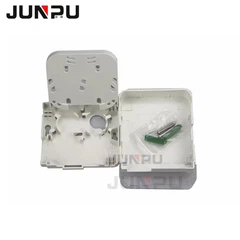
Think of a Fiber Optic Junction Box as a mid-span connection or branching point. Its primary purpose is to house and protect a simple splice or mechanical connection between two or more fiber optic cables.
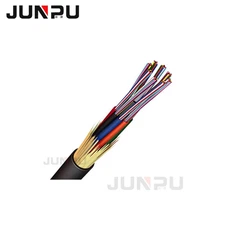
Primary Function: Splicing and branching. It's used to connect two cables, break out a multi-fiber cable into individual fibers, or provide a safe point for cable repair.
Typical Applications:
Extending the length of a cable run.
Branching a main cable into multiple directions.
Providing a service loop and storage for spliced fibers.
A point of repair for a damaged cable.
Key Characteristics: Generally simpler in design, with a focus on providing a sealed environment for a limited number of splices. They may have incoming and outgoing ports but lack the splitter integration and high subscriber port count of a distribution box.
Fiber Optic Distribution Box: The End-Point Hub
A Fiber Optic Distribution Box (or Drop Terminal) is typically the end point in the distribution segment. It is the access point where the signal is distributed to multiple end-users.
Primary Function: Distribution and termination. It houses the optical splitter that divides the signal from the feeder cable to multiple drop cables leading to individual homes/businesses.
Typical Applications:
The final access point in an FTTH network, often mounted on a pole, wall, or in a pedestal.
Centralized management for subscriber connections.
Key Characteristics: Features higher port density, integrated splice trays, and dedicated mounting points for splitters. It is designed for easy access by technicians to connect or disconnect individual subscribers.
Junpu Provides the Full Ecosystem
Whether you need a simple, robust Junction Box for a mid-span splice or a fully-featured Distribution Box for subscriber management, Junpu has you covered. Our product range is designed to work together seamlessly, providing a complete solution for your FTTx network.
Unsure which box is right for your specific project? Our technical experts can help.
Contact Junpu with your network diagram, and we'll recommend the optimal solution.
Email: sales@junpu-catv.com | Phone/WhatsApp: +8618868807126