










With the accelerated pace of global digitalization, optical fiber communication has become the core foundation supporting high-speed networks. Whether in the popularization of home broadband or the high-speed interconnection of enterprise data centers, optical fiber cables play an indispensable role. However, in different application scenarios, the challenges and requirements faced by optical fiber cables vary. Choosing the right type of cable directly affects network stability and long-term reliability.
Differences Between Indoor and Outdoor Cabling
In practical projects, there are clear differences between indoor and outdoor cabling.
Indoor cabling: The environment is usually stable, with greater emphasis on flexibility, flame retardancy, and ease of installation. For example, in office buildings, shopping malls, or home networks, fiber cables often need to be routed through conduits, bent, or even concealed in walls. Therefore, flexibility and bend resistance are critical. At the same time, indoor cables must meet strict flame-retardant and low-smoke zero-halogen (LSZH) standards to ensure safety.
Outdoor cabling: Outdoor environments present more complex challenges. Cables may need to be suspended, buried underground, or installed through ducts, which requires high tensile strength, heat resistance, and moisture protection. For instance, in Southeast Asia, with its high humidity, waterproofing and anti-mold properties are essential; while in the Middle East, with extreme heat, resistance to high temperatures and UV radiation is a major concern for contractors.
This shows that the requirements for optical fiber cables differ significantly by environment, and a single standardized design cannot meet the diverse global deployment needs.
Considerations for Tensile Strength, Heat Resistance, and Moisture Protection
In harsh outdoor environments, optical fiber cables must endure long-term natural stressors.
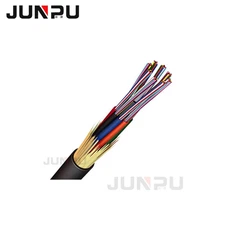
Tensile strength: Optical fibers themselves are very fragile. If subjected to excessive tension during installation or operation, they can easily break or cause signal attenuation. Therefore, outdoor cables typically incorporate steel wires or Kevlar yarns to enhance overall tensile performance.
Heat resistance: In summer, exposed cable surfaces may reach temperatures above 70°C. If the cable materials lack adequate thermal resistance, outer jackets may crack, or fibers may loosen, seriously compromising transmission performance.
Moisture protection: Humidity is an invisible threat to fiber. Once water penetrates the cable, it can alter the refractive index of the fibers and corrode metallic strength members. To prevent this, outdoor fiber cables are usually designed with water-blocking tapes, gel filling, or moisture-resistant layers to ensure long-term stability.
These technical considerations determine whether cables can operate reliably under extreme conditions, making them top priorities for contractors during procurement.
Looking Ahead
With the rapid development of 5G, cloud computing, and the Internet of Things, the application scenarios for optical fiber cables will continue to expand. The diverse challenges of different environments require ongoing optimization in cable structure and performance.
At Junpu Optoelectronics, we leverage years of R&D experience and rigorous quality control to deliver high-standard optical communication products to customers worldwide. In the future, fiber optics will not only remain the "foundation" of the information superhighway but also continue to be an indispensable pillar in the global digital transformation. Hangzhou Junpu Optoelectronic Equipment Co.,Ltd will stay committed to innovation and reliability, working hand in hand with partners to advance the global fiber optic communication industry.