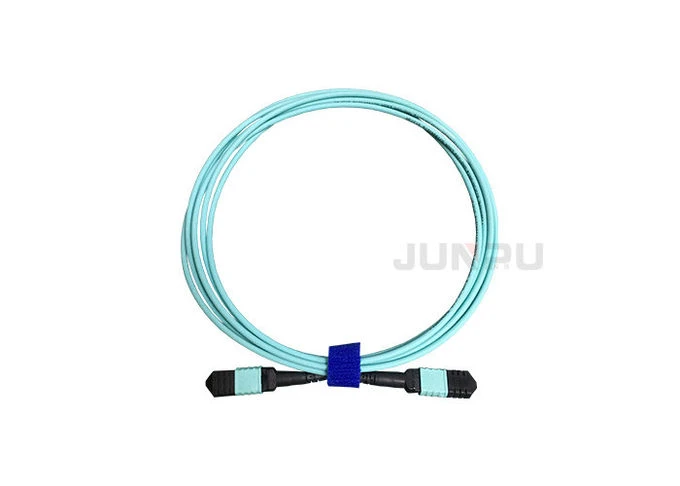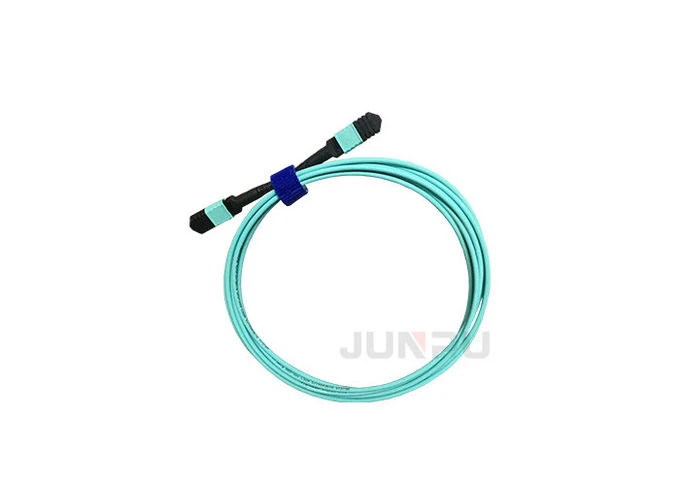









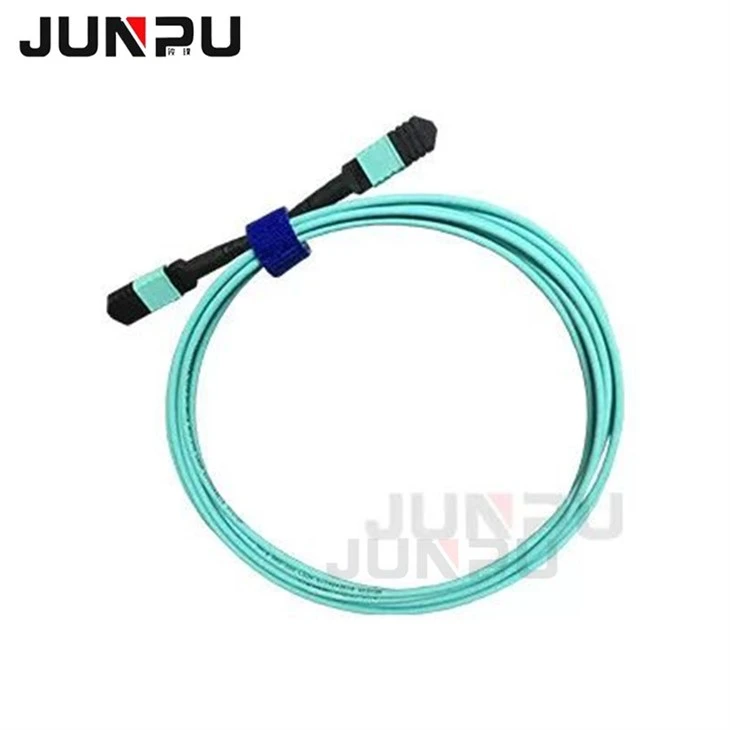
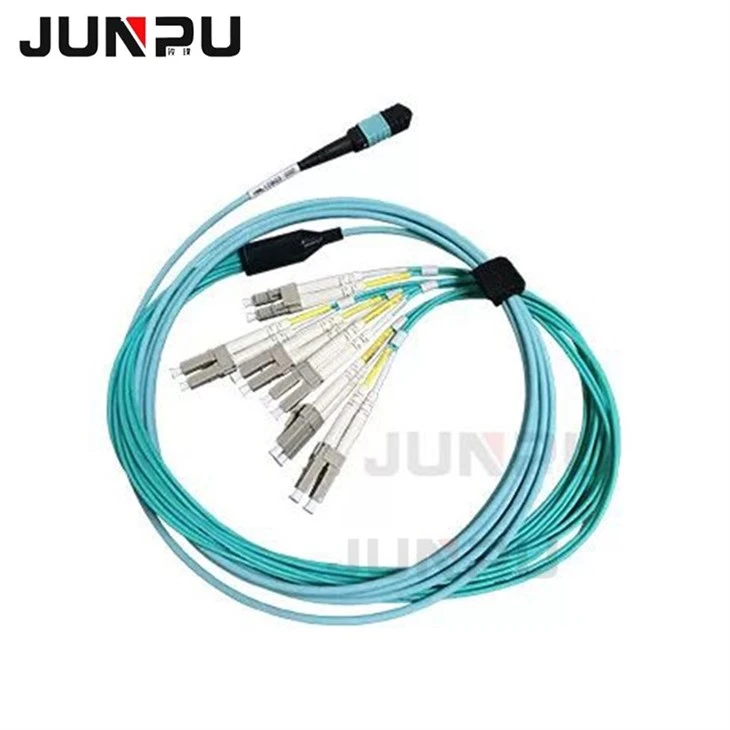
Duplex Fiber Optic Patch Cord
Quick details
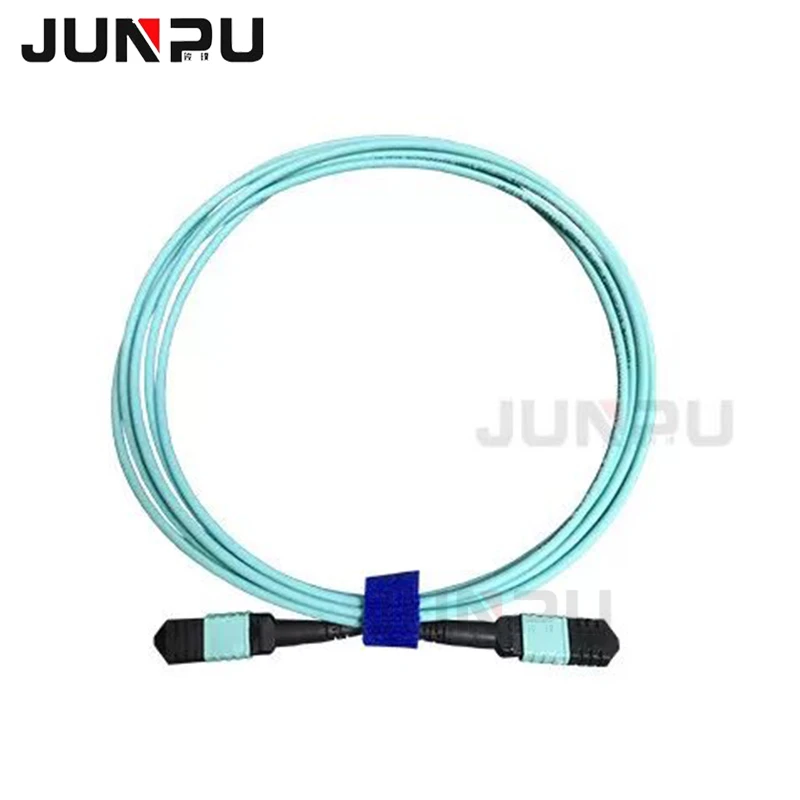
A duplex fiber optic cable consists of two strand fibers of glass or plastic, and it can be regarded as two simplex cables. This duplex fiber cable is carefully structured in a zip-cord arrangement, which is most often used for duplex communication between devices where require simultaneous, bi-directional data transfer. (One fiber transmits data one direction and another fiber transmits data in the opposite direction.) Larger workstations, fiber switches and servers, fiber modems, and similar hardware tends to require duplex fiber cable. Duplex fiber is also available in single mode duplex fiber optic cable and multimode duplex fiber optic cable. Half duplex and full duplex are two types of fiber optic duplex cables that are used in different data transmission applications.
Simplex and duplex are different kinds of communication channels in telecommunications and computer networking, which provide pathways to convey information. According to the ITU-T definition, a simplex circuit is one where signals can flow in only one direction at a time. One end is the transmitter, while the other is the receiver and that is not reversible. On the other hand, the full duplex system uses two fibers to communicate. This allows one fiber to transmit from point A to point B while the other fiber transmits from B to A. Therefore, both ends of a full-duplex system have both transmitters and receivers. Unlike simplex, duplex can be divided into half duplex and full duplex. Half duplex means a communication channel that data can be transmitted in both directions on a signal carrier but not simultaneously. One end is the transmitter, while the other end is the receiver and may be reversible (this is the opposite of simplex). This makes it similar to a two-way radio. In addition, full duplex is two-way communication achieved over a physical link that has the ability to communicate in both directions simultaneously.
Applications
●Optical access network
●Data processing networks
●Premise installations
●Local Area Networks(LANs)
●Wide Area Networks(WANs)
Specification
|
Pigtail Connector |
PC (SM) |
UPC (SM) |
APC (SM) |
MM |
|
Return Loss (dB) |
≥45 |
≥50 |
≥60 |
≥35 |
|
Insertion Loss (dB) |
≤0.2 (max≤0.3) |
|||
|
Repeatability (dB) |
≤0.1 |
|||
|
Durability(1/Matings) |
≥500 |
|||
|
Operation Temperature (°C) |
-25~+70 |
|||
|
Tensile Strength (N) |
≥90 (Φ3.0), ≥70 (Φ2.0), Φ0.9 |
|||
|
Fiber |
9/125um, 50/125um,62.5/125um,ect |
|||
|
diameter |
0.9mm 2.0mm, 3.0mm etc |
|||
|
Cable material |
PVC, LSZH |
|||
|
Cores |
Simplex, duplex, 4cores, 6cores, 8cores, 12cores etc |
|||
|
G.652 |
G.655 |
50/125μm |
62.5/125μm |
||
|
Attenuation |
@850nm |
|
|
≤3.0 dB/km |
≤3.0 dB/km |
|
(+20℃) |
@1300nm |
|
|
≤1.0 dB/km |
≤1.0 dB/km |
|
|
@1310nm |
≤0.36 dB/km |
≤0.40 dB/km |
|
|
|
|
@1550nm |
≤0.22 dB/km |
≤0.23dB/km |
|
|
|
Bandwidth (Class A) |
@850nm |
|
|
≥500 MHz·km |
≥200 MHz·km |
|
@1300nm |
|
|
≥1000 MHz·km |
≥600 MHz·km |
|
|
Numerical Aperture |
|
|
0.200±0.015NA |
0.275±0.015NA |
|
|
Cable Cut-off Wavelengthλcc |
1260nm |
≤1480nm |
|
|
|