








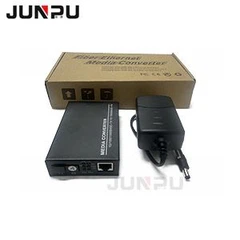


Optical fiber transmission has the advantages of wide transmission bandwidth, large communication capacity, low loss, no electromagnetic interference, small cable diameter, light weight, and abundant raw material sources, so it is becoming a new transmission medium. When light is transmitted in the optical fiber, it will produce loss. This loss is mainly composed of the transmission loss of the optical fiber itself and the fusion loss at the optical fiber joint.
Introduction to optical fiber fusion technology What is an optical fiber cutting machine?
Answer: An optical fiber cutting machine is a device that cuts optical fibers and other cables in a fixed way. Its main function is to achieve standard smoothness and smooth cuts, and prepare for the next step of optical fiber welding.
What is an optical fiber fusion splicer?
Answer: An optical fiber fusion splicer is to fuse and connect the cut optical fibers at both ends according to standard parameters so that the light can transmit signals normally in the line.
What is the main purpose?
Answer: These two devices are actually usually used as an integral optical fiber. Transmission has the advantages of wide transmission bandwidth, large communication capacity, low loss, no electromagnetic interference, small cable diameter, light weight, and abundant raw material sources, so it is becoming a new transmission medium. When light is transmitted in the optical fiber, it will produce loss. This loss is mainly composed of the transmission loss of the optical fiber itself and the fusion loss at the optical fiber joint. Once the optical cable is ordered, the transmission loss of the optical fiber itself is basically determined, while the fusion loss at the optical fiber joint is related to the optical fiber itself and the on-site construction. Efforts to reduce the fusion loss at the optical fiber joint can increase the transmission distance of the optical fiber relay amplification and improve the attenuation margin of the optical fiber link.
1. Cold connection of optical fiber
1668392039882070.jpg
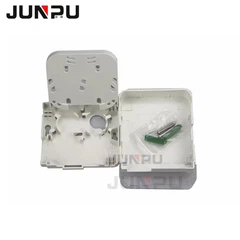
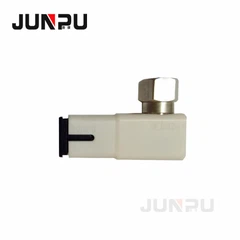
It is used for optical fiber to connect optical fiber or optical fiber to connect pigtails. This is equivalent to making a joint (optical fiber to connect pigtails refers to the connection between the core of the optical fiber and the pigtail instead of the pigtail head mentioned in the former). The thing used for this cold connection is called an optical fiber cold splicer. The optical fiber cold splicer is used when two pigtails are connected. The main component inside it is a precise V-groove. After the two pigtails are pulled, the cold splicer is used to connect the two pigtails. It is simpler and faster to operate, and saves time than using a fusion splicer to connect. There are generally two forms of cold connection: the first is the on-site quick connector for termination; the second is the cold connector for fiber optic docking. With the rapid development of FTTH fiber to the home, the demand for fiber optic cold connectors has also greatly increased.
Fiber optic quick connectors and fiber optic cold connectors will play an irreplaceable role in FTTH access. The on-site termination technology of fiber optic quick connectors just solves this problem. It is convenient and fast without the need for fusion splicing, and the splicing cost is low, which truly realizes access anytime and anywhere.
It is used for fiber optic docking or fiber optic docking pigtails, which is equivalent to making joints (fiber optic docking pigtails refers to the docking of the core of the fiber and the pigtail instead of the pigtail head mentioned in the former). The thing used for this cold connection is called a fiber optic cold connector. The fiber optic cold connector is used when two pigtails are docked. The main component inside it is a precise V-groove. After the two pigtails are pulled, the cold connector is used to dock the two pigtails. It is simpler and faster to operate, and saves time than using a fusion splicer to fusion splice.
2. Optical cable fusion splicing
Optical cable fusion splicing is a meticulous job, especially in the end face preparation, fusion splicing, fiber coiling and other links, which requires the operator to observe carefully, consider carefully, and operate in a standardized manner.
When light is transmitted in the optical fiber, it will produce loss. This loss is mainly composed of the transmission loss of the optical fiber itself and the fusion loss at the optical fiber joint. Once the optical cable is ordered, the transmission loss of the optical fiber itself is basically determined, and the fusion loss at the optical fiber joint is related to the optical fiber itself and the on-site construction. Efforts to reduce the fusion loss at the optical fiber joint can increase the transmission distance of the optical fiber relay amplification and improve the attenuation margin of the optical fiber link.
3. The difference between cold connection and fusion connection
Hot connection
A fusion splicer is required; a fiber optic cutter is used to connect two optical fibers, and no other auxiliary materials are required. The advantages are stable quality and small connection loss (about 0.03 to 0.05). The disadvantages are that the equipment cost is too high and the power storage capacity of the equipment is limited. Field operations are restricted.
Cold connection
Does not require too much equipment, just a fiber optic cutter. But each connection point requires a quick connector (which can be said to be the mainstream operation in the future). It costs about 5 to 10 yuan. The advantage is that it is easy to operate and suitable for field operations. The disadvantage is that the loss is relatively large. About 0.1 to 0.2dB per point. "Cold splicer" At present, there are few manufacturers that can directly produce it in China, and the cost is high. There is no room for choice in business and technical services. Secondly, matching liquid is used in cold splicers. Due to the small use and short time, the aging problem needs time to test.
4. Introduction to fiber optic fusion technology
What is a fiber optic cutter?
Answer: Fiber optic cutting machine is a device that cuts optical fiber and other cables in a fixed way. Its main function is to achieve standard smoothness and smooth cuts, and prepare for the next step of optical fiber welding.
What is a fiber optic fusion splicer?
Answer: A fiber optic fusion splicer is to fuse the cut optical fibers at both ends according to standard parameters to make the light transmit signals normally in the line.
What is it mainly used for?
Answer: These two devices are usually placed in an integrated tool box, mainly used in engineering where optical fiber is used to transmit signals, because the access and access of optical fibers must involve seamless connection of optical fibers.
Who needs it mainly?
Answer: There is a special training section to train optical fiber welding personnel. This is mainly for training, and has nothing to do with academic qualifications. It is mainly used for information engineering personnel. One device is generally between 20000-100000.
V. Main factors affecting optical fiber fusion loss
There are many factors that affect optical fiber fusion loss, which can be roughly divided into two categories: intrinsic factors of optical fiber and non-intrinsic factors.
1. Intrinsic factors of optical fiber refer to factors of optical fiber itself, mainly four points.
(1) The fiber mode field diameters are inconsistent;
(2) The core diameters of the two fibers are mismatched;
(3) The core cross section is not round;
(4) The concentricity between the core and the cladding is poor.
2. The non-intrinsic factors that affect the fiber splicing loss are the splicing technology.
3. The influence of other factors. The operation level of the splicing personnel, the operation steps, the fiber winding process level, the electrode cleanliness of the fusion splicer, the fusion parameter settings, the cleanliness of the working environment, etc. will all affect the value of the fusion loss.