








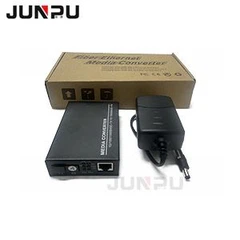


An optical transceiver, sometimes called a fiber optic transceiver, is an interconnect component that can transmit and receive data. It consists of two main parts: a transmitter and a receiver. This critical component uses fiber optic technology to convert electrical signals into optical signals and vice versa.
Optical transceivers are used in most industries and are essential in telecommunication applications due to their ability to transmit large amounts of data over a network. This versatile component can be plugged into or embedded in network equipment. They come in a variety of shapes and sizes. The different types of optical transceivers are defined by the form factor.
Radiall offers a range of optical transceivers for harsh environments. They provide high performance and reliability for a variety of applications.
Optical Transceiver Design
The design of an optical transceiver must balance a variety of factors. For example, engineers want to reduce the size and weight of the equipment while maximizing the communication capabilities across the network. As engineers add more and more functionality to telecommunication applications, space becomes a precious commodity. Their functionality also requires higher data bandwidth and power, increasing the amount of data transmitted at any given time.
Radiall products provide spacious solutions, faster transmission speeds, and lower data loss. Made from drawn glass, our optical fibers feature a flexible and lightweight design. Additionally, since optical fiber is a non-metallic material, it is immune to electromagnetic interference and electrical noise in the environment.
Fiber Optic Transceivers from Radiall
These products operate over a wide temperature range (-40 to +90° C) and are available in a variety of options. A variety of packaging options are available, including surface mount, pluggable and multi-source agreements as well as specific custom packages covering bit rates up to 10 Gbps.
S-Light optical transceivers are among the world's smallest transceivers for harsh environment applications. They are a perfect match for endpoint devices and sensors, where low power consumption and small board space are key.
D-Light optical transceivers are available in 2, 4 or 12 channel counts. The D-Light family offers the highest channel integration density. Designed for direct integration with high-speed FPGAs and SERDES, the family enables state-of-the-art data and signal processing applications. The D-Light family offers 40 Gbps, 120 Gbps and beyond.
Compatible with a wide range of electrical and optical interfaces, these transceivers are suitable for any application requiring high performance and robustness.